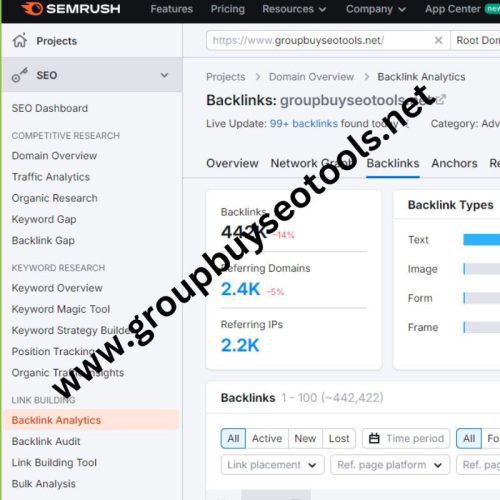
Why are rankings different on semrush than ahrefs?
Semrush vs. Ahrefs: Why Doesn’t The Numbers Add Up?
As a content marketer, crushing it feels awesome. You open up Ahrefs and traffic is growing- the graph just points up. So are your keyword positions ever on the rise! Things look swell indeed. A feeling of dread suddenly overtakes you when you log into Semrush just to be sure.
Instantly, the feeling of victory is gone. Semrush shows that traffic has levelled off, and so does your keyword: you thought it was #3 but now it’s at #7.
Panic time. Just what’s happening here? Is one of the tools telling fibs? Or, is your whole SEO strategy sliding down the tubes?
This situation is not only typical of my friends within the Digital Marketing community, but also being replayed between tens thousands modern webmasters and search engine optimizers. When you compare data from industry titans like Semrush with that of Ahrefs, however–they nearly never match up. Sometimes the discrepancies can be slight; in others, there is a yawning chasm.
However, it is essential that you understand neither tool is ‘broken.’ The difference in ranking is not some abnormality with either kit. It is a feature-worthy demonstration of how two different software houses (both living off advertising reviews that they post) are collecting, processing and interpreting data. If you understand the reasons for these differences, then: you will not get unnecessarily worried and be able to make good decisions on what information to believe that ‘s coming US.”
Why are rankings different on semrush than ahrefs?
These Tools Aren’t Google
Above all, remember: neither Semrush nor Ahrefs is Google. Nor do they have direct access to Google’s internal inside business records.
Both are third-party software tools that seek to reverse-engineer Google search results. They have their own proprietary bots (crawlers) which trawl the net and index pages, then give an estimate; by guesswork really where each particular page ranks for various keywords.
Because they are individual enterprises, they are endowed with different resources, have methodologies that are not the same and are limited by different constraints.
Different Crawlers and Indexing Schedules
Picture two people deciding they need to count every book in one enormous, chaotic library, which is continually taking on new books in addition.
Person A (Semrush) might start with all the fiction and count very soon.Person B (Ahrefs) could begin with non-fiction and cover the condition of your books’ plates in greater detail.Similarly, if you ask them for the total count at the end of day, they will come up with different numbers.A web crawler works this way-exactly.AhrefsBot is famous for being so active and it has many haters. It is said to be the Web’s second highest traffic ranker and more trusty than Yahoo’s Slurp Your new backlink or a change in ranking may be found faster by it in some niches.
SemrushBot has its own rhythm and reasons
It may well survey from a high volume keyword more frequently than it does a low volume long-tail keyword.If Ahrefs visited your site this morning and Semrush hasn ‘t been on since Tuesday before last, Ahrefs is going to display its new off-page ranking improvement: and with Semrush will be old data.2. Different Databases and Keyword SetsRankings are not universal.
A tool can only tell you a ranking for a keyword if that keyword exists in its databases.Semrush and Ahrefs both maintain mass databases of keywords, but their archives do not match.Semrush proclaims a database of over 20 billion keywords.Ahrefs also boasts a similarly huge index; however, they may prioritize different regions or types of query.If you rank for a specific long-tail keyword which is in the Ahrefs database but not in the Semrush database, Ahrefs will give you that traffic and ranking. Semrush effectively ignores it because it doesn’t “know” this key word exists.
This often results in Ahrefs showing higher total traffic numbers for niche websites that rely on very specific and lower-volume search terms than Semrush.3. The Clickstream Factor vs. PPIC DataHow these tools estimate search volume-and therefore, how much traffic a given ranking will bring to you–is another major source of inconsistency.
Google Keyword Planner
The industry standard has long been to scrape data from Google Keyword Planner (GKP). This is in reality a double-edged sword: it groups similar keywords together and sometimes also hides precise volume.
Ahrefs buys data from third-party providers that track the browsing behaviour of literally millions of actual users (anonymised, of course). As such, this lets them see what people actually type into search bars and what they click on. This is why Ahrefs often has more accurate information than other tools upon “zero-click” searches (where one gets an answer directly on the results page and does not bother clicking a link).
Semrush uses a mix of clickstream data and a sophisticated algorithm that incorporates data from Google Ads and other proprietary sources. Their machine learning models are excellent at forecasting trends, but because the source “ingredients” are different from Ahrefs, the resulting traffic “cake” looks different.
Geographically Targeted Searches and Individual Personalization
For most people, when you check your ranking, you are usually looking at a specific snapshot: “Google US desktop results.”
But search results are constantly changing. Google personalizes the direction that results from searches go based on a few factors:
The user’s previous search history
The user’s exact physical location (city/zip code)
The device being used (mobile versus desktop)
Semrush might be checking your ranking from a server in Virginia, while Ahrefs is doing so from a server in California. If you own a local business or the SERP page is very changeable, those two places could show completely different rankings for you.
Plus, Google is always testing. Over the course of the year, they are running thousands of live experiments. One tool may have picked up a SERP in which you were at #4 during a test, while the other picked the “control” version, where you were at #6.
Analyzing the Discrepancy between “Traffic Value” and Rankings
You might also observe that even if rankings are similar, the estimated traffic cost or value is wildly different.
How much would you have to bid in Google Ads to gain the same amount of traffic that your organic key words are doing the work for you now? It uses Cost Per Click (CPC) data.
CPC is not static, but dynamic. It varies every day with the real-time bidding wars among advertisers. The intervals used by Semrush and Ahrefs in updating their CPC data are not always synchronized. If Semrush updated your top keyword’s CPC yesterday but Ahrefs is still using a number from last month, the expected numbers (with the help of the “Traffic Value” metric) will be out of kilter.
Which of the Data is Trustworthy?
If the numbers are different, then one must be true and the other false, mustn’t they? Not necessarily.
Neither tool should be treated as the final authority on what’s really going on at your own website. The only authority on your own rankings and traffic are Google Search Console and Google Analytics. They are both a direct connection to the search engine and to your web server.
But you cannot use Google Search Console for your competitors. That’s where you need Semrush and Ahrefs.
The Power of Trends over Absolute Differences
Instead of obsessing about the exact number (for example, “Semrush says 5400, Ahrefs 6200”) focus on the trend line.
Are both tools showing growth over these past six months?
Did they both record a drop after the last Core Update?
Is the gap between you and your competitor shrinking on both platforms?
If the trend is the same, then what one does is working.
Discipline the Cost of Intelligence
These insights are not cheap, particularly if they are used by freelancers or small agencies seeking to verify data across a number of different platforms. The ultimate grade for both Semrush and Ahrefs subscribers might come to just under a thousand dollars each month.
The pricing barrier mentioned is one reason why many SEO professionals are looking for alternative ways of accessing info:groups where participants all buy together help their prices keep them out of the mainstream. Groups such as groupbuyseotools can save users from false economies — at this one place you will get many premium SEO tools all in parallel operation for much less investment.
If you are willing to carry out this task, it is especially good for us all. You can get comparative ranking data from Ahrefs and Semrush without spending twice on two different full-price enterprise subscriptions.
Tools like Groupbuy SEOTool allow you to compare data from each of the other tools so that the most realistic values may be found. You can understand data thoroughly only by viewing both simultaneously.
Differences by Platforms
In conclusion, here is a quick guide to how the platforms tend to lean:
Semrush: Known for good PPC/Advertising stats and some high-volume keywords that are extremely findable to its very fast spider. It may be used frequently in content pre-checking as well for technical site checks now known as “website health” on certain platforms.
Ahrefs: Traditionally the king of backlink analysis (though Semrush now gives tough competition for this crown). Its keyword data is often known for being cleaner than most extracts from “zero-click” searches and to provide traffic numbers that are actually worth at least as much as the clickstream data says they should be worth in reality.
Frequently Asked Questions
Why is my Google Search Console displaying data different from both tools?
Google Search Console (GSC) shows real performance data that real searchers have experienced. Both Semrush and Ahrefs calculate that same performance from their own unique perspectives on your rankings. GSC is reality; SEO tools are simulations.
My rank fell on Semrush but not Ahrefs. Should I be worrying?
Look in Google manually (anonymous) and check GSC. If GSC is down, the drop is real. If GSC is steady, maybe Semrush just picked up a blip or had bad data from somewhere.
Which tool is better for keyword research?
The answer varies from person to person. Ahrefs has superior data on how strenuous it is to rank for a term (Keyword Difficulty), while Semrush excels in related keyword suggestions and understanding user intent.
Trust the Strategy, Verify the Data
Rank discrepancies are a feature of the SEO industry, not a bug. The exact algorithms both Ahrefs and Semrush use for ranking is their closely-held secret, and they will never agree 100%.
Don’t let the differences bog you down. Use these tools as indicators and for a general sense of the trend, but always base your actions on the real world data secured from your own analytics. Whether you use only one tool or buy into both services of them, the objective is the same: to steadily grow over time.
Semrush vs. Ahrefs: Why Are The Rankings Different?
Confused by conflicting data from Semrush and Ahrefs? We explain why these SEO giants show different rankings and which one you should listen to.
Related posts:
 Moz Pro Alternative : Boost Your Website Traffic Easily
 SERP Robot Group Buy- most accurate SERP checker
 Blackhat get all seo tools semrush ahrefs one price
 Ahrefs Pricing Haryana Delhi Punjab Tamil Nadu Kerela
 Semrush Pakistan China St Helena Morocco Cameroon Cyprus
 Ahrefs group buy india- Groupbuyseotools
 Use ahrefs dashboard on group buy track campaigns
 How to build direct traffic moz semrush? Groupbuyseotools